The company is new
Established 2026, RC 9633666, operating from Wuye in Abuja. We do not have a long portfolio, awards or a decade of handovers behind us, and we will not imply otherwise.
FAQs
Earth building in Nigeria carries real doubts, and most of them are reasonable. Here is what we know, what we are still testing, and where we would rather say we do not have the number yet.
Before You Ask Us
Most people meeting a laterite-based material for the first time arrive with the same doubts. They are fair doubts. Earth building in Nigeria carries the memory of unstabilised mud walls that failed, and no amount of branding erases that. What follows is our attempt to answer plainly, including where the answer is “we do not have that number yet.”
Group One
What it is, what it is made of, and what it is not.
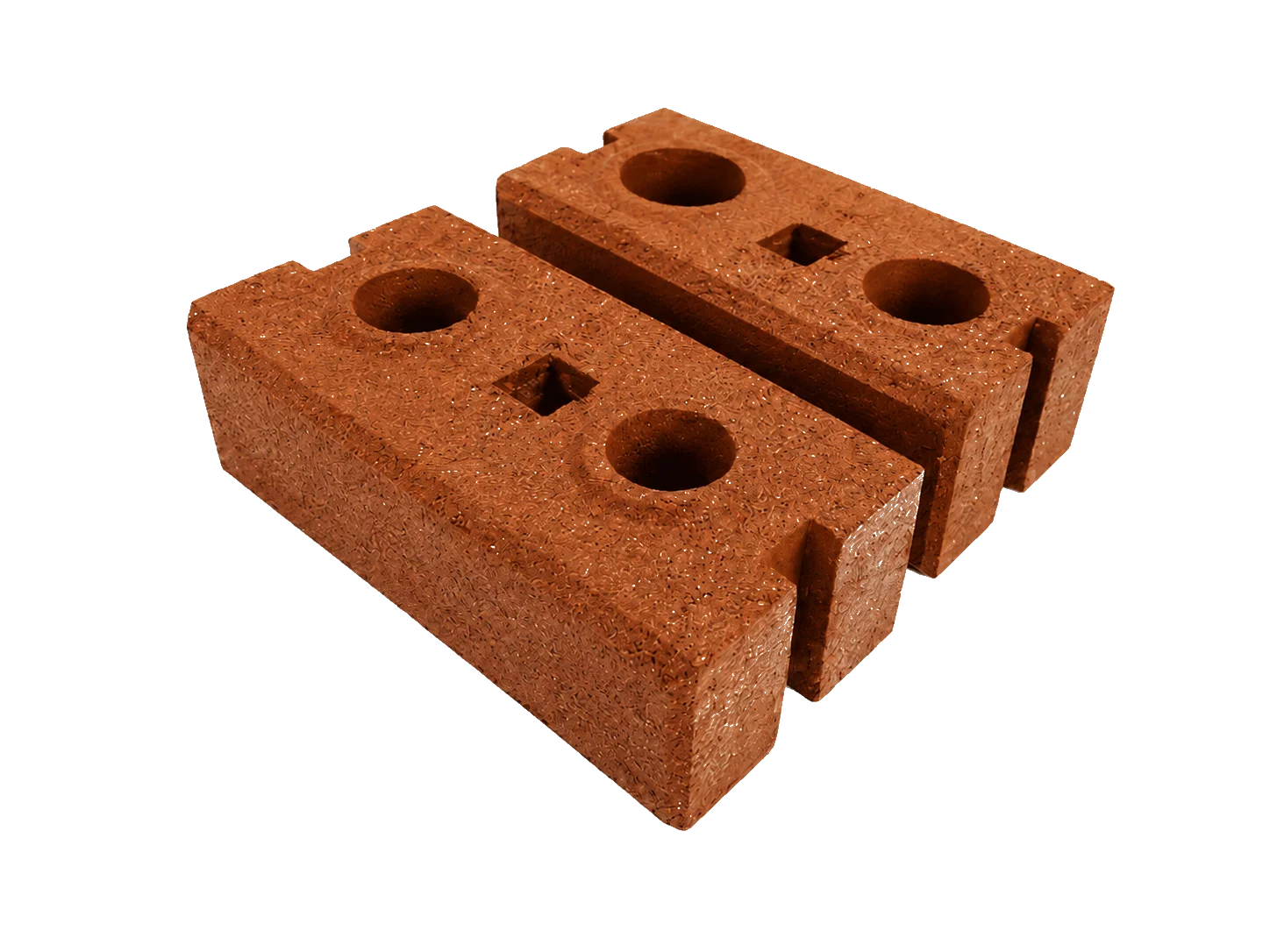
No. Mud is earth and water. Our brick is laterite that has been screened for particle size, dosed with a cement and pozzolan stabiliser to a fixed formula, then compressed under pressure in a press and cured. Stabilisation and compaction are the two things unstabilised mud never had, and they are what change the behaviour of the wall in water.
The honest version: it is the same soil, treated as an engineering material rather than as a building tradition. The red colour is the only thing the two share.
A stabilised, compressed block does not dissolve. The cement and pozzolan content binds the fines so the block does not slake when wet, and compaction closes the pore structure that lets water travel.
That said, we do not pretend water is a non-issue. Every earth wall, ours included, wants three things from the design: a foundation and plinth that lift the first course clear of splash-back, a generous roof overhang, and drainage that moves water away from the base rather than ponding against it. A well-detailed Ecored wall handles Abuja and Enugu rains. A badly detailed one built straight off the ground with a flush roofline will suffer, and so would sandcrete.
Three practical differences.
Where sandcrete still wins is familiarity. Every builder in the country knows how to specify, price and lay it. We are the ones who have to prove ourselves, not the other way round.
We are not going to publish a compressive strength figure until NBRRI has issued the certificate for the current mix design, because the number would be ours rather than an independent laboratory’s and you would be right not to trust it.
What we can tell you today: the blocks are strength-tested through our research partnership with NBRRI, and the target is load-bearing performance for single- and two-storey residential construction. If your engineer needs certified figures before specifying, contact us and we will tell you honestly whether the certificate for that product line is in hand yet.
Fire: the material is mineral. There is nothing organic in a stabilised laterite block to burn, which is one of the real advantages over timber-framed or adobe-with-straw construction. We have not commissioned a rated fire test, so we will not quote you a fire rating in hours.
Termites: there is no cellulose in the block, so it does not feed them and they cannot tunnel through a compressed stabilised wall the way they move through timber. Termites in a building normally get in through the ground and through timber elements, so your roof structure and any joinery still need the usual treatment. The wall itself is not the vulnerable part.
Full Disclosure
We would rather you hear this from us than discover it during a site meeting.
Established 2026, RC 9633666, operating from Wuye in Abuja. We do not have a long portfolio, awards or a decade of handovers behind us, and we will not imply otherwise.
We are an NBRRI research partner and the cement is SON certified. Product-level test certificates are being completed. Ask us for the current status on the specific product you need.
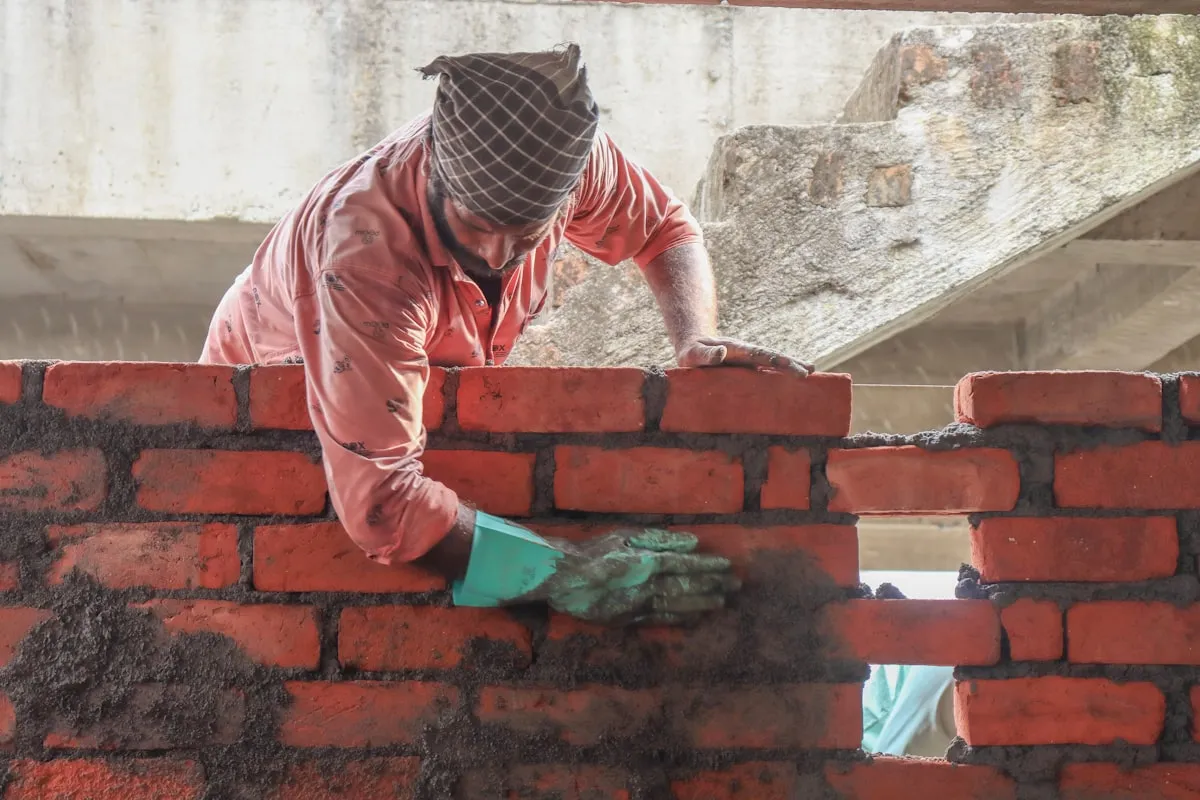
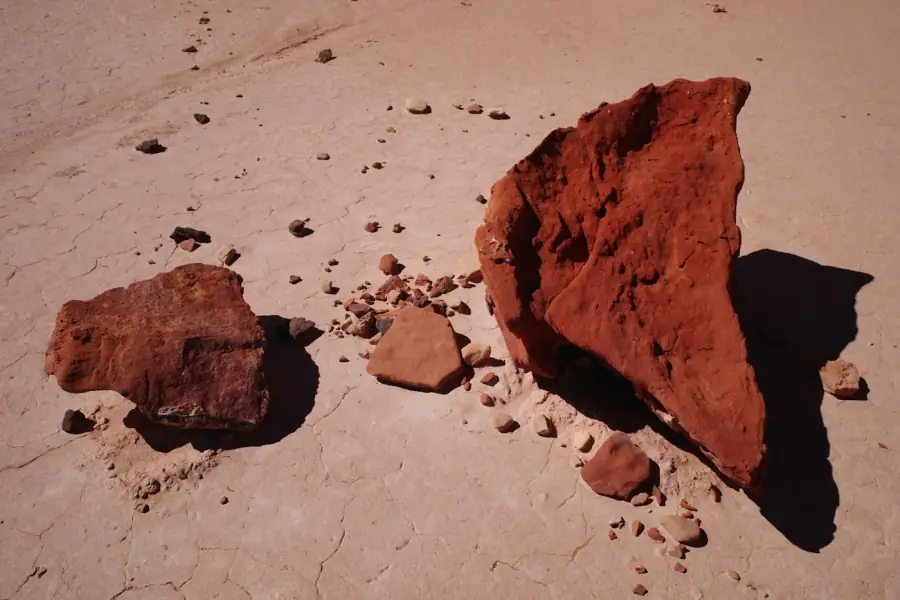
Imagery across this site is licensed stock chosen to show the material language, not photographs of completed Ecored projects. Real site photography replaces it as buildings hand over.
Group Two
What changes on your site, and what does not.
Not special masons. Any competent bricklayer can lay Ecored block. The interlocking profile actually removes work rather than adding it, because the courses register into each other and there is less mortar to butter and less levelling to chase. Most crews are comfortable after the first day.
Equipment is a different matter. Producing the blocks needs a press and a compactor. That is why we supply machinery and equipment as a service rather than assuming you own it, and we can provide trained operators on request. If you are buying finished blocks from us rather than pressing on site, you need nothing beyond ordinary masonry tools.
Structurally, no. A stabilised compressed block is designed to be left fair-faced, and the exposed red wall is most of the reason people come to us in the first place.
There are two cases where we would still render. One is a highly exposed elevation taking driven rain with no overhang to protect it. The other is where the client simply wants a painted finish. If you do render, the render must be breathable, a weak lime- or earth-based mix rather than a hard, dense cement render, because a dense skin traps moisture behind it and does more damage than no render at all.
Two storeys is within the intended range for residential work, subject to your structural engineer’s design and the certified strength figures for the product. Concrete slabs, lintels, ring beams and columns are used exactly as you would use them in any masonry building. We are replacing the walling, not the structural frame or the foundation.
For anything above two storeys, or for a load path that concentrates heavily onto the walling, speak to us and to your engineer before ordering. We will tell you if it is outside what we can currently support.
This is the hardest question on the page and we will not give you a comfortable answer.
Nigerian lenders and valuers are conservative and default to sandcrete. Some will finance an earth-built property without argument once the material carries certification and the drawings are stamped by a registered engineer. Others will hesitate simply because it is unfamiliar, and that hesitation is about precedent, not about physics.
What helps in practice: certified test documentation for the material, a structural design signed by a COREN-registered engineer, and building approval from your local planning authority. What we can do is supply the material documentation and speak to your engineer directly. What we cannot do is promise you what a particular bank will decide. If financing is central to your project, raise it with your lender before you order, not after.
Either. You can buy material and hand it to your own contractor. But build supervision exists because a material only performs the way it was tested if it is detailed and laid the way it was tested, and the failure modes on earth walls are almost always detailing failures rather than material failures.
Our engineers can supervise from foundation through handover. See services for how that is scoped.
On Price
Our claim is up to 30% lower total construction cost against sandcrete construction. The word doing the work in that sentence is total. It is not a bag-for-bag price comparison, and anyone who tells you a low-carbon material is simply cheaper per unit is selling you something.
Group Three
Ordering, lead times, and seeing the material for yourself.
Three product lines and two services.
Full specifications are on the materials page.
We are based in Wuye, Abuja, and Abuja FCT is where we are quickest and most reliable. We also work into Lagos and Enugu. For anywhere else in the country, ask before you plan around it rather than assuming.
Because we are early stage, we will not publish a fixed lead time we cannot yet guarantee across every order size. What we will do is give you a firm date for your specific quantity and location when we quote, and tell you plainly if your timeline is one we cannot meet. For large volumes, talk to us as early in the programme as you can. Block production is not instant and pretending otherwise helps nobody.
Yes, and we would encourage it. Nobody should commit an envelope to a material they have only seen on a website. Come to the Wuye office and handle the block, or ask us to bring samples to your site or to your architect’s office when we meet.
If you are outside Abuja, say so when you get in touch and we will work out how to get material in front of you.
For cement, no, you can buy by the bag. For blocks and pavers, the practical minimum depends on whether we are pressing to order for your project, and we will tell you the threshold when we quote. Small quantities for a boundary wall or a single-room extension are welcome. Tell us the wall area and we will do the count with you.
Boundaries
A short list, kept deliberately visible.
Group Four
What the material carries, and what the environmental argument actually rests on.
Our laterite cement is SON certified and produced to NIS 444-1, the Nigerian standard for composite cements, at Grade 42.5R. SON, the Standards Organisation of Nigeria, is the body that certifies building materials in this country, and SON certification is the one to ask any supplier for.
We are also a research partner of NBRRI, the Nigerian Building and Road Research Institute, which is where the block testing is done. Partnership is not the same as certification, and we describe it as what it is.
At present we do not publish a kilogram-of-CO₂-per-tonne figure, because we have not completed a life-cycle assessment we would be willing to stand behind.
What the argument rests on is straightforward and you can check the logic yourself. Cement clinker is the carbon-heavy component of conventional construction, and our blend replaces a portion of it with laterite and pozzolan. Aggregate haulage is the other major contributor, and sourcing earth close to site shortens that distance considerably. Both of those reduce emissions.
The boundary that matters is cradle-to-gate: raw material extraction, processing, and delivery to site. It excludes the building’s operational life, though the thermal mass of an earth wall reduces cooling load there too. Until we have an assessment to that boundary, we will describe the mechanism rather than quote you a number.
Any extraction has an impact and we are not going to claim otherwise. What differs is scale and depth. Laterite for construction is won from shallow surface deposits rather than deep quarrying or river dredging, and the volumes involved for a residential project are modest against what an equivalent sand and granite specification requires.
Extraction sites still need to be selected and reinstated properly, and that is a discipline rather than an automatic benefit of the material.
Cooler, in our experience and in the broader literature on earth construction, yes. The mechanism is thermal mass: a dense laterite wall absorbs heat slowly through the day and releases it after sunset, which flattens the indoor temperature swing instead of tracking the outdoor one. Combine it with screen walls and cross-ventilation and the effect is noticeable.
Prove it, not yet. We have no instrumented comparison of an Ecored building against a sandcrete equivalent on the same site, and that is the only evidence that would actually settle the question. When we have it, it will be published on the research page with the methodology attached.
Ask it directly. If the answer is that we do not know yet, that is what you will get, and it is usually more useful than a brochure.